



News
Worldwide K-Beauty Platform SILICON2


'We Will Expand Overseas K-Beauty Select Shops to 100 Next Year”
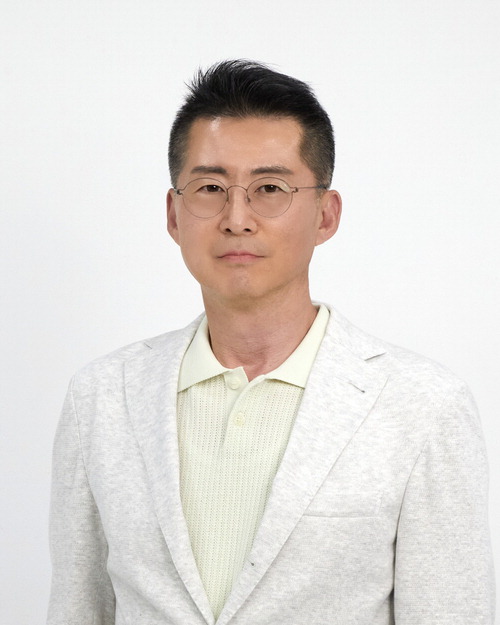
“Our goal is to expand Moida, Silicon2’s offline K-beauty select shop, from the current 18 overseas stores to 37 by year-end with additional openings in France, Italy and elsewhere, and to raise this year’s sales 34% from last year to 1.5 trillion won (about $1.1 billion) by stepping up our push into Japan.”
Kim Sung-woon, CEO of Silicon2 (pictured), laid out this blueprint in a recent interview with Maeil Business Newspaper. Silicon2’s core business is distribution: it purchases K-beauty products directly and supplies them to leading global retailers such as Boots, the U.K. chain often compared to Olive Young, as well as Walmart and Target.
The company does business with more than 7,500 buyers in Korea and abroad and sells Korean cosmetics in 175 countries. Silicon2 has helped raise awareness of K-beauty brands that have recently gained popularity overseas, including Medicube, Beauty of Joseon, SKIN1004 and Anua.
◆ Aggressively Expanding Overseas Select Shops
Kim plans to actively increase the number of Moida stores, the company’s own select shops, to grow the business. “We currently have around 18 Moida stores. This year, we plan to open our first stores in Spain, Germany and Portugal and add more in France, Italy and elsewhere, bringing the total to 37 by year-end,” he said. “Next year, we will expand to 100.”
Moida is a store that brings together a wide range of K-beauty products, much like Olive Young, and operates only overseas. It has the largest number of overseas locations among K-beauty select shops.
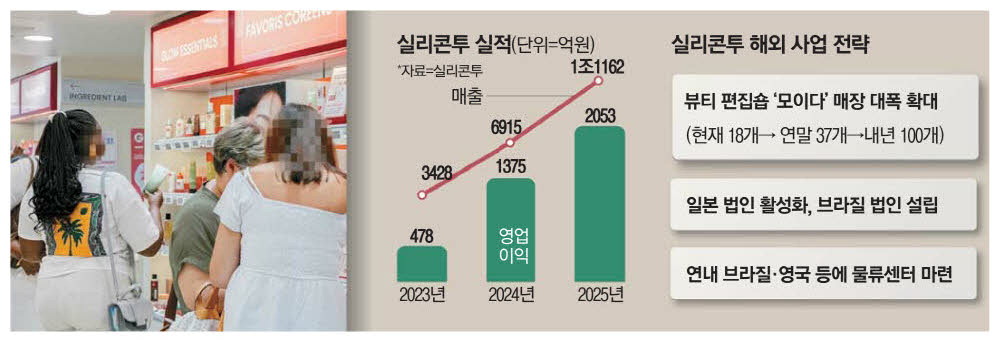 “There is also demand for K-beauty in Latin America and Africa, but Korean companies have yet to enter these markets effectively,” Kim said. “Starting with our Mexico subsidiary, which began operating last month, we will accelerate our push into Latin America.”
Silicon2 will also fully activate its Japan subsidiary starting in the second half of this year. Japan has long been a market that individual K-beauty brands tackled on their own, but as product cycles have shortened and rapid response has become more important, a growing number of companies have approached Silicon2 about partnering.
“It takes about three months from when Silicon2 purchases products directly to when they are sold to end consumers,” Kim said. “Using the big data we have built up by working with numerous brands, along with our in-house enterprise resource planning (ERP) system, we can track real-time sales and the latest trends.”
Silicon2 is also expanding its logistics network to support its overseas growth. The company already has warehouses in the U.S., Poland, Indonesia and elsewhere, and plans to set up logistics centers in Brazil and the U.K. this year.
◆ K-Beauty Must Guard Against C-Beauty’s Challenge
While optimistic about the future of K-beauty, Kim warned about the rise of C-beauty, or Chinese cosmetics.
“Content such as K-pop and K-dramas underpins the K-beauty boom,” Kim said. “If the popularity of that content continues, the outlook for K-beauty is bright.” He added, “K-beauty products are diversifying from basic skincare into functional cosmetics and hair and body products. As the price range also widens from low-priced to mid- and premium-priced products, the potential for further growth has increased.
” He went on to say, “That said, K-beauty products are broadly similar in quality and packaging, so success depends heavily on marketing. Brand differentiation strategies have become extremely important.”
He identified the growth of C-beauty as a major threat to K-beauty. “K-beauty is strong in basic skincare, while C-beauty has focused on color cosmetics,” he said. “But Chinese cosmetics brands are quickly catching up with K-beauty, armed with digital marketing, and they could raise their profile by moving into basic skincare.”
“When Chinese cars first appeared, they weren’t very popular, but now their standing has risen, led by electric vehicles,” Kim said. “In five to six years, the standing of C-beauty could also change.”

CEO : Kim Sung-woon Business Registration Number : 214-87-03359 Landline : +82-70-8622-5826 Fax : +82-31-789-3851
Copyright (C) SILICON2 Co., LTD. All rights reserved.
- Privacy Policy
- We reject the unauthorized collection of any email addresses from our website